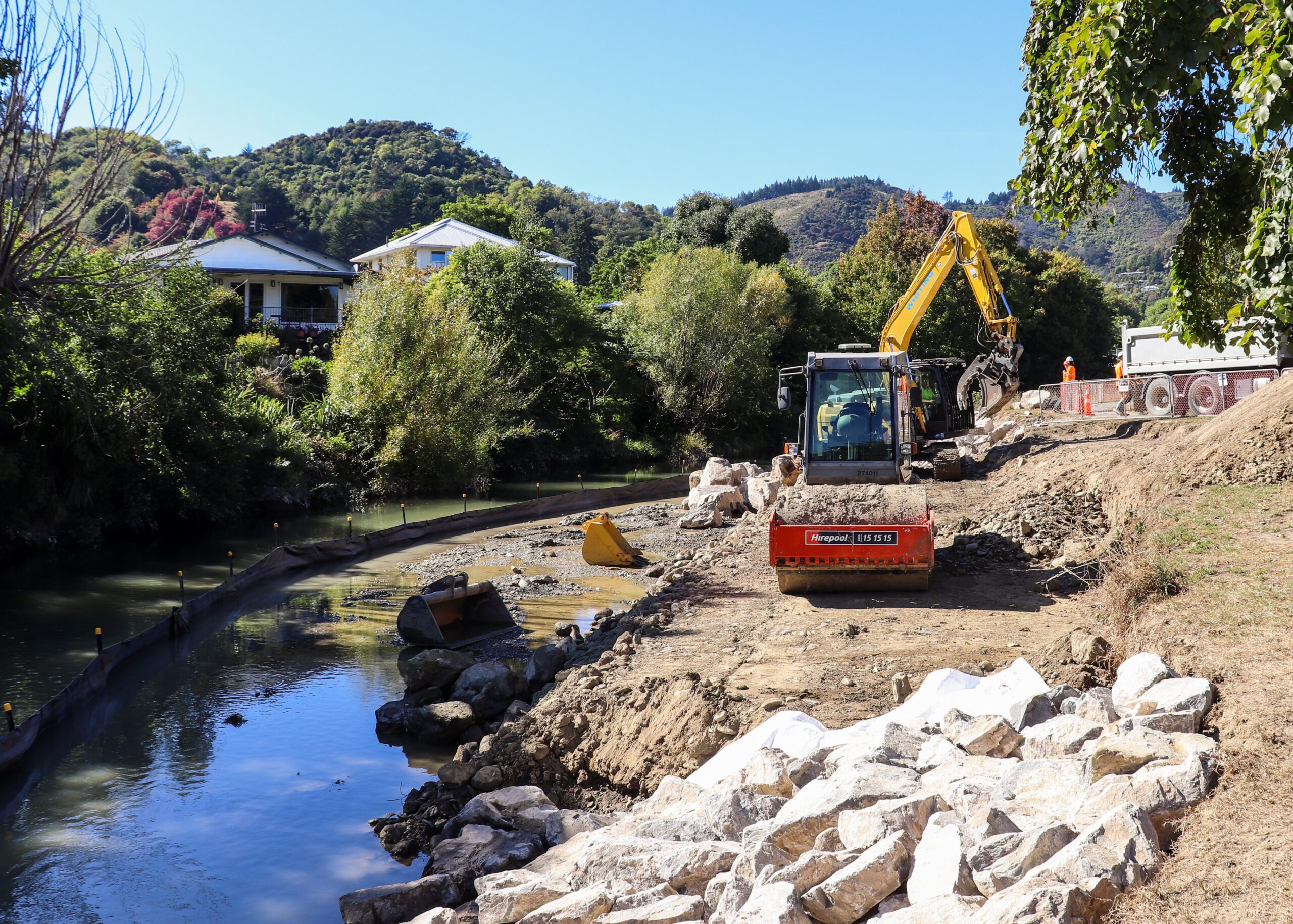
Environmental requirements formed part of the construction methodology from the outset. Fish salvage was completed before work began, with ecological oversight supporting the protection of aquatic life and īnanga habitat within and around the site. Erosion and sediment controls remained in place during construction, and disturbed areas were reinstated as the civil work was completed.
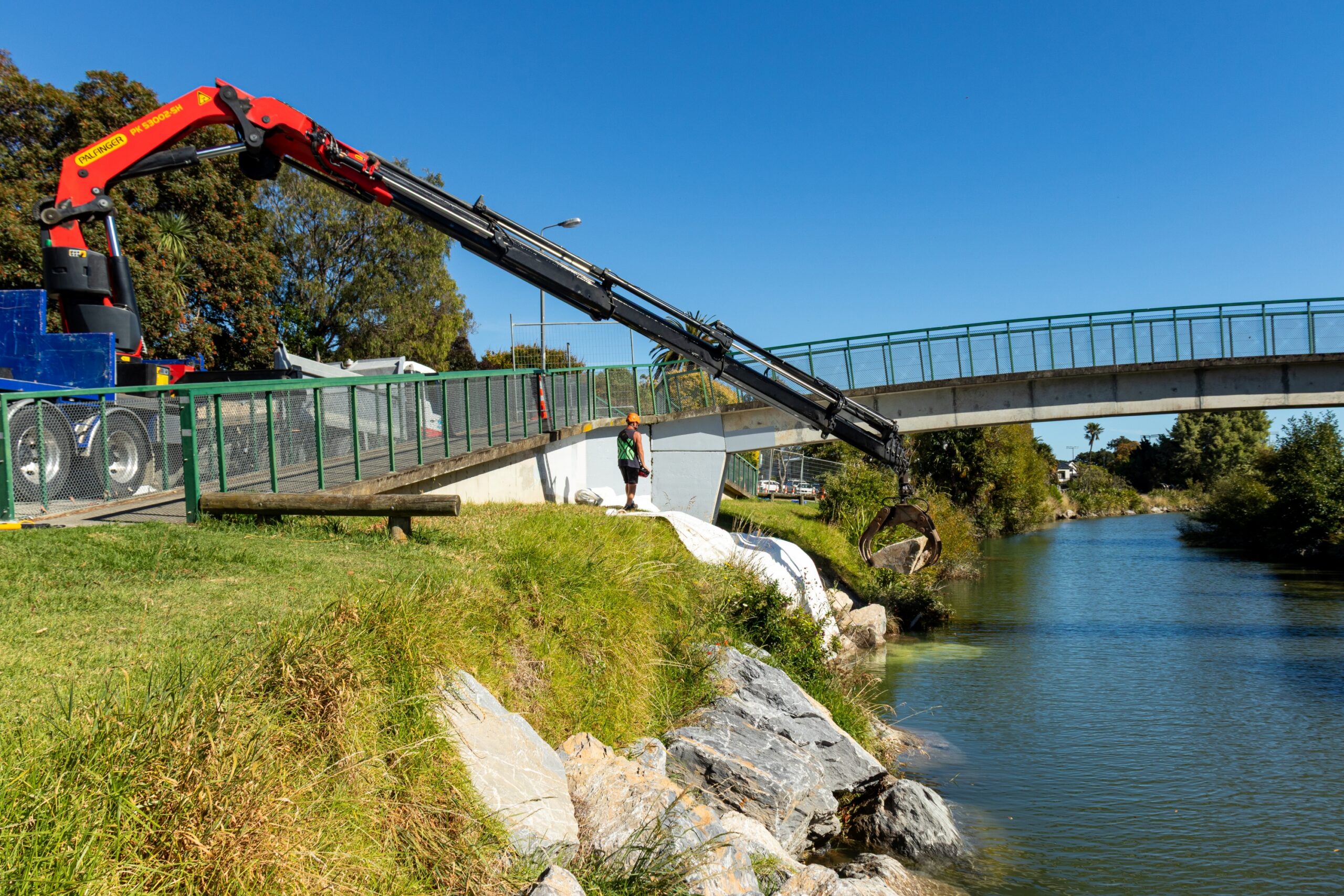
The footbridge and nearby sewer infrastructure placed further limits on access and lifting. The team planned machinery movements and rock placement around these assets, while traffic management supported safe use of the surrounding path and road environment. Work beside private property also required clear coordination so construction impacts and access requirements could be managed as the project progressed.
Kūmānu's projects, waterways, traffic management, and health and safety teams worked alongside Nelson City Council and Cawthron specialists. This kept the construction and environmental requirements within the same delivery plan.
The completed work stabilised the damaged river edge and reduced the risk to surrounding assets. Successful delivery relied on crane-assisted construction, practical water management, ecological controls and careful planning around public access and live infrastructure - the combination required for flood recovery work in an urban river corridor.