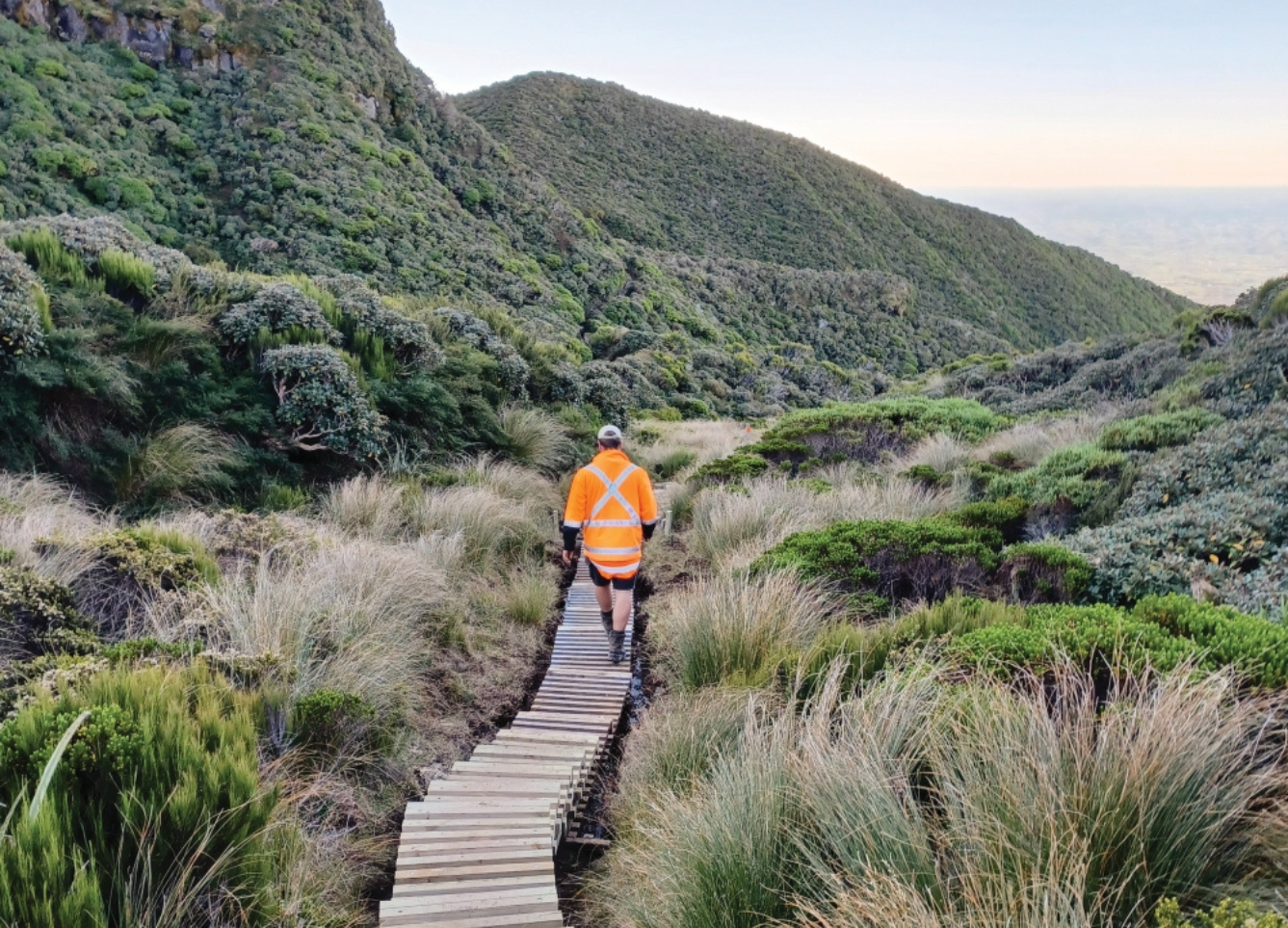
Working within a sensitive national park environment required careful management of construction activities and a strong focus on minimising disturbance.
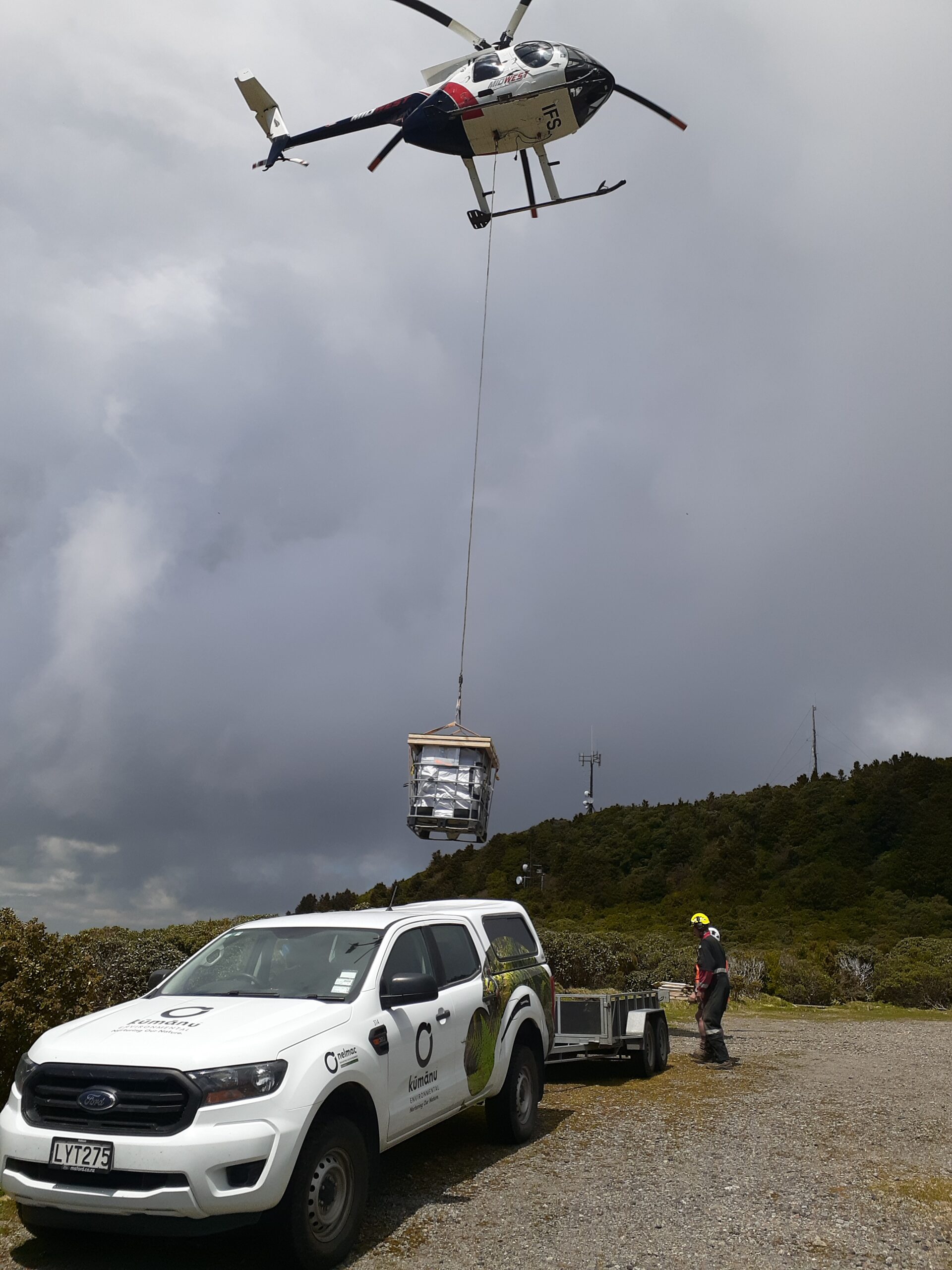
Key project risks included high rainfall, snow exposure, work at elevation, remote access and lifting operations. High winds were a particular hazard due to the site's elevation and exposed alpine setting. These were managed through seasonal programming, detailed pre-planning, appropriate cold and wet-weather PPE, ongoing monitoring of conditions and coordinated helicopter lift planning.
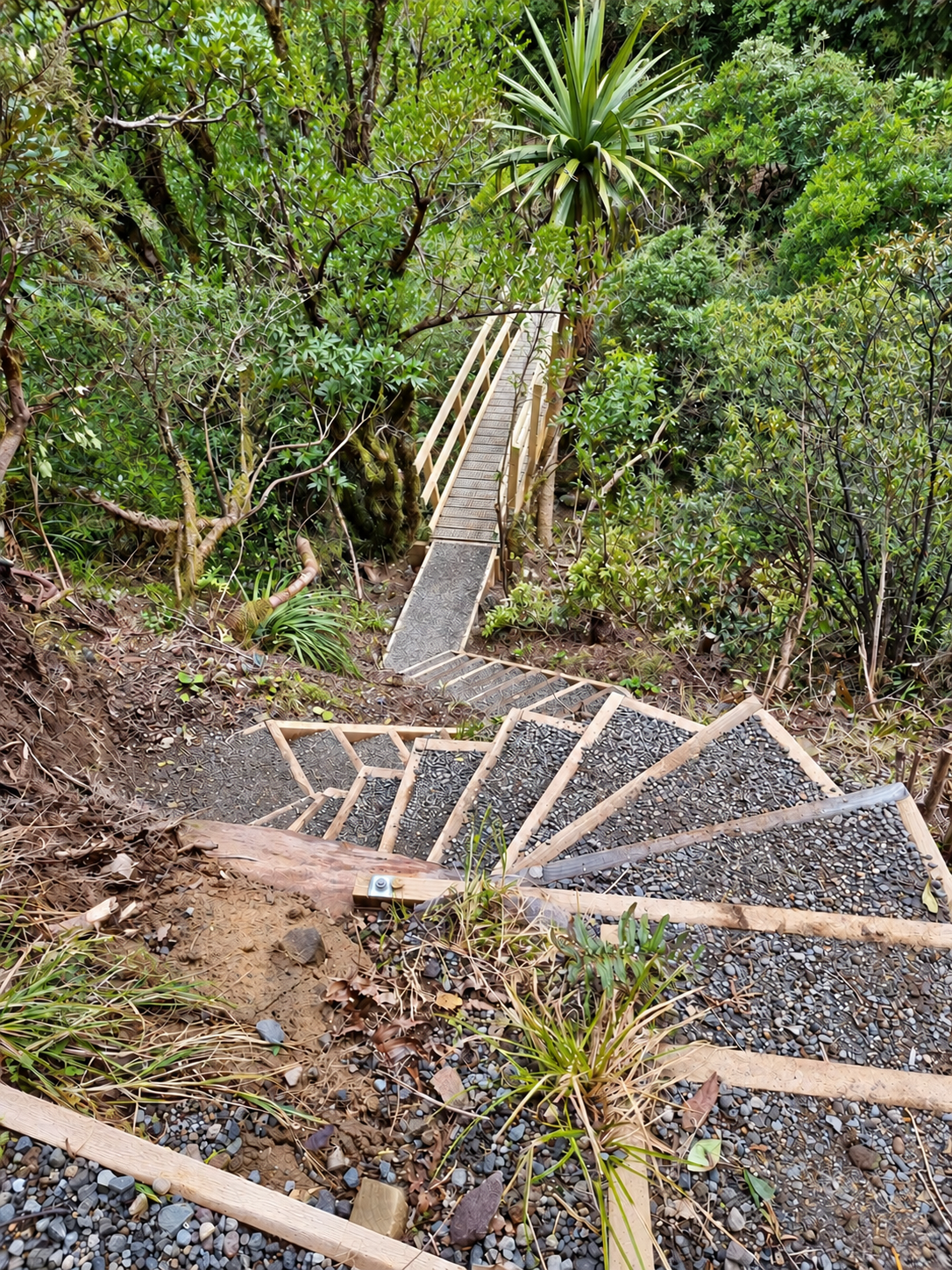
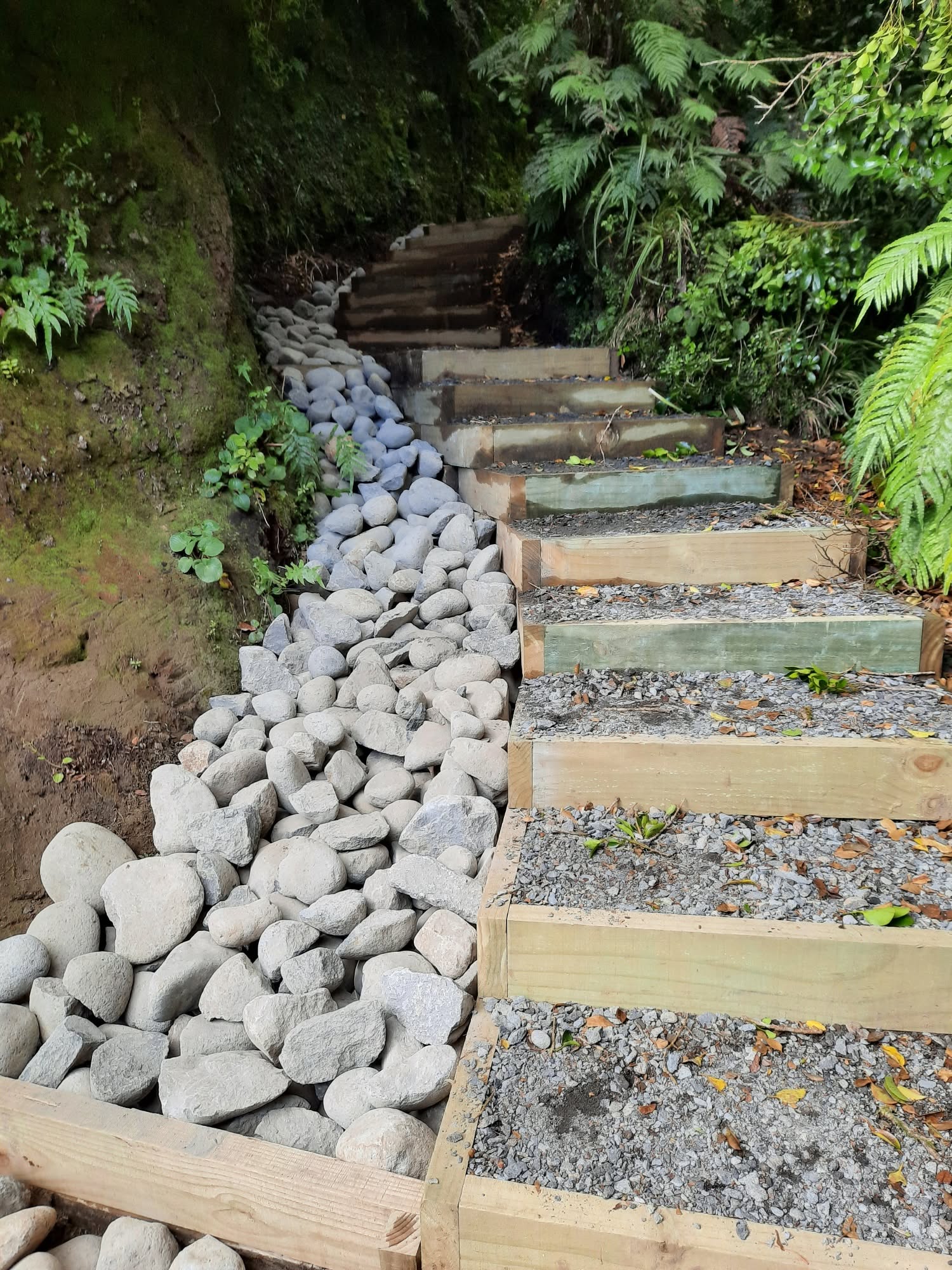
Drainage formed a key part of the upgrade, helping manage water movement through the track corridor and improve long-term resilience of the crossing in an area known for extreme weather conditions.
The project was completed ahead of programme and within budget, delivering a more durable track surface, improved drainage and upgraded visitor infrastructure across a challenging section of the Mount Taranaki Crossing.
Successful delivery relied on experienced track-building crews, effective management of remote-access logistics and the ability to adapt construction methods to constantly changing alpine conditions while maintaining safety, environmental standards and programme certainty.