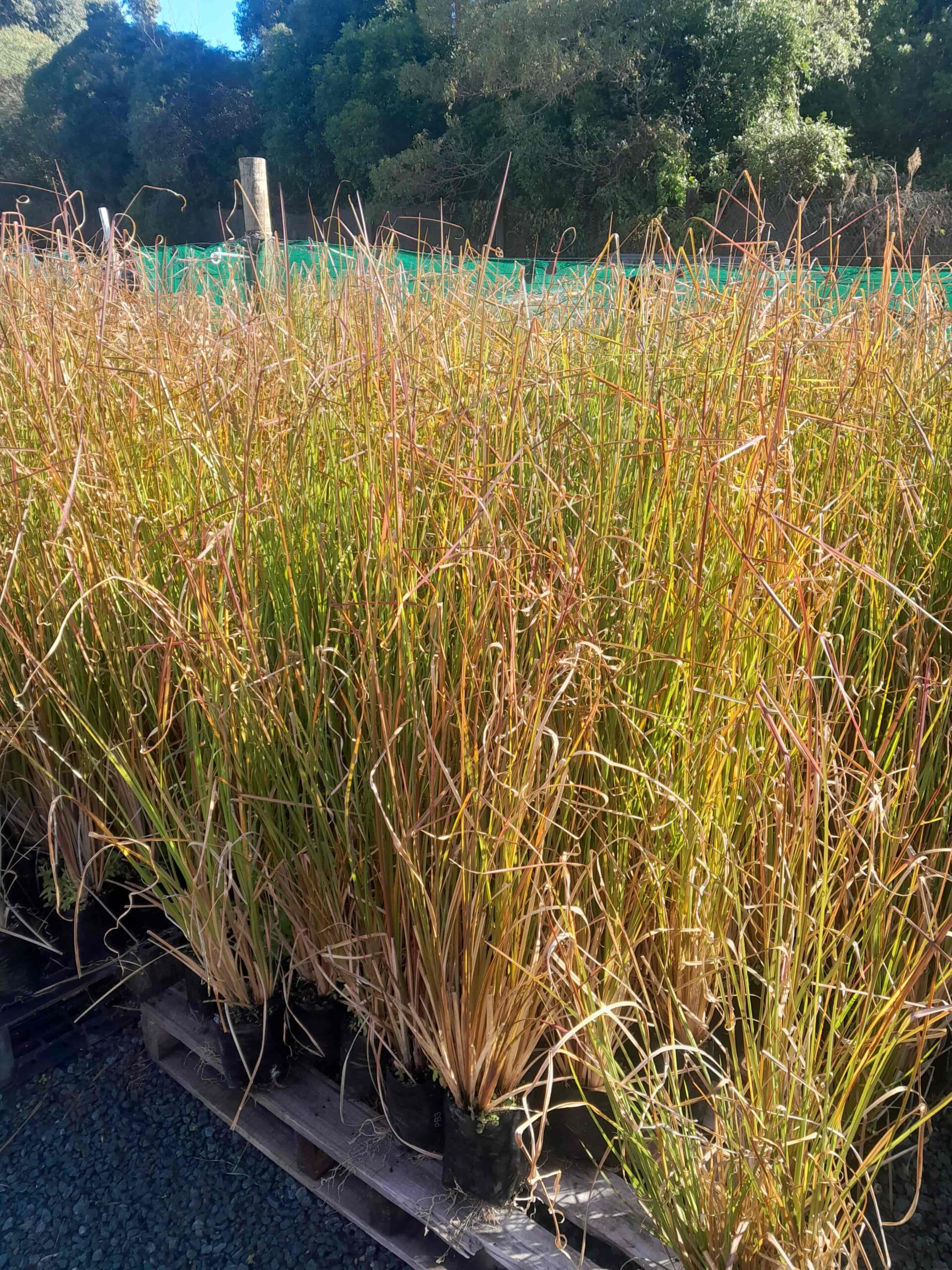
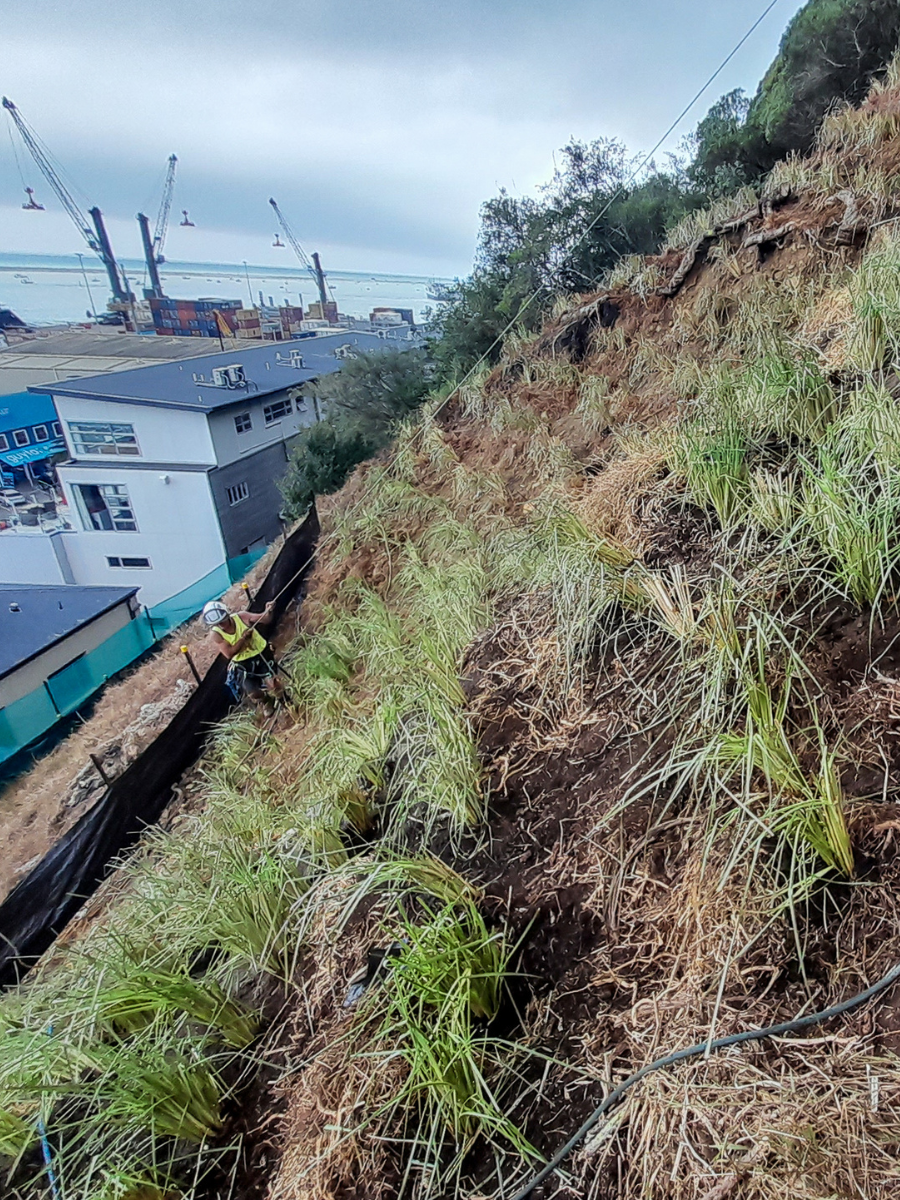
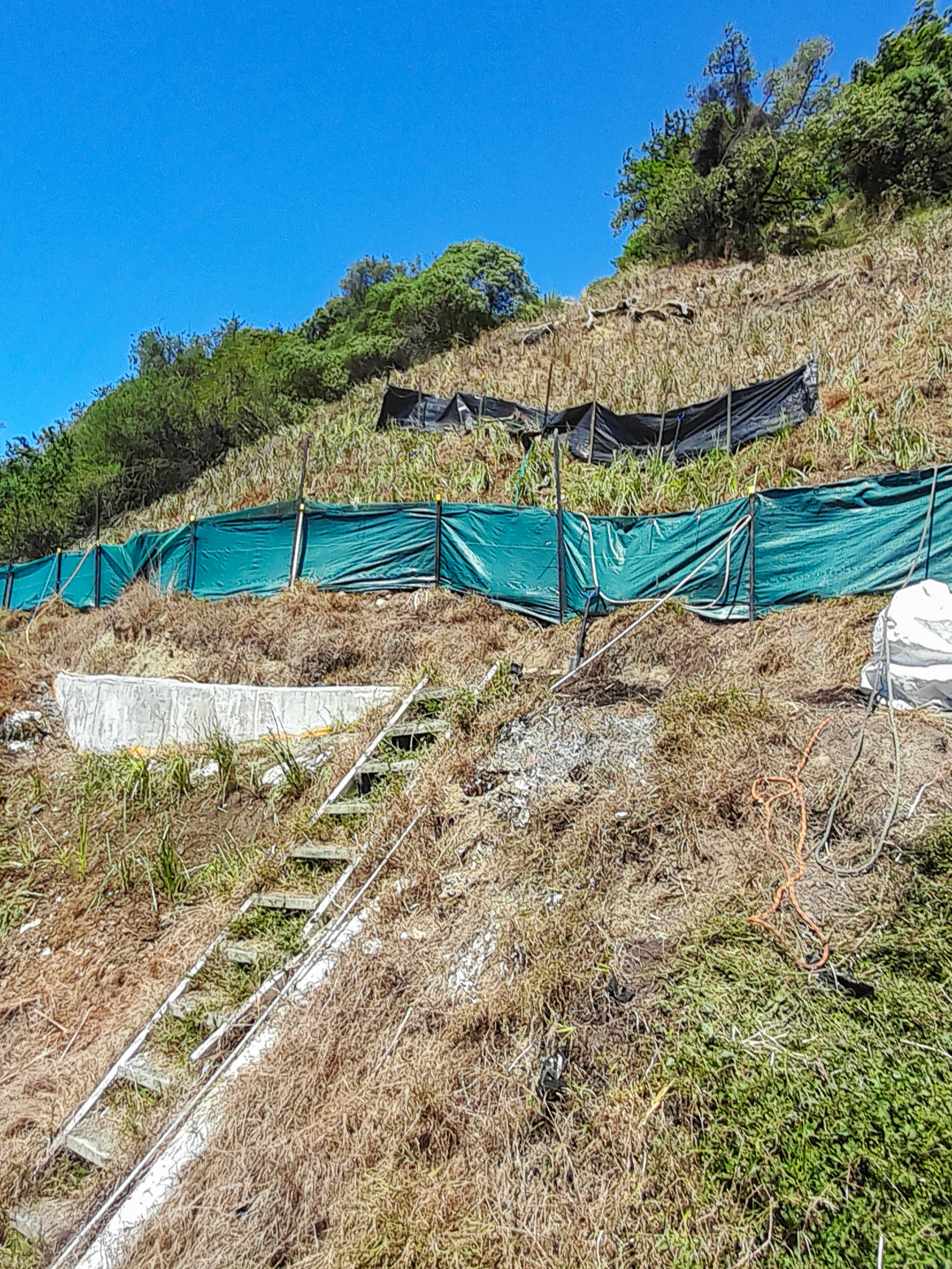
On a steep north-facing slope in Nelson, Kūmānu has planted more than 1,500 vetiver grass plants as part of a practical, nature-based approach to slope stabilisation.
Vetiver grass, Chrysopogon zizanioides, was selected for its remarkable root system, which can grow to depths of around six metres. These deep vertical roots help bind soil, reduce erosion and strengthen slip-prone ground from within. When planted closely, vetiver can form a living underground barrier that supports land stability while remaining visually integrated with the surrounding landscape.
Unlike concrete or shotcrete, vetiver works with natural processes. Its dense foliage helps slow rainfall runoff, filter water, retain topsoil and preserve moisture, while its roots support infiltration and groundwater recharge. This makes it especially useful on steep sites where water movement, soil loss and land stability are closely connected.
Vetiver is also low-maintenance, resilient and non-invasive. It can tolerate drought, flooding, a wide range of soil types and pH levels, pests, disease and temperature extremes. Its sterility and dependence on light reduce the risk of unwanted spread, making it a responsible option for environmental stabilisation.
Beyond erosion control, vetiver has potential in wider remediation work, including contaminated land and runoff filtration. Kūmānu is continuing to explore how this versatile plant can support more resilient landscapes and deliver practical, long-term environmental benefit.